

25 Rapport Building Questions for School Counselors, Therapists, and Teachers (Plus My Favorite Games and Tools from the Counseling Fanny Pack of Fun Store on TpT!)
One of the biggest mistakes new counselors make is trying to jump straight into solving a student’s problem.
I get it. We want to help. We want to teach coping skills, improve social skills, or help students manage their anxiety and emotions. But after 18 years as a school psychologist, I’ve learned that before any of those interventions will truly be effective, you need one thing first:
Rapport.
If you’ve ever had a student who answered every question with…
- “I don’t know.”
- “Nothing.”
- “I don’t care.”
- Shrug…
…you’re definitely not alone. It’s my favorite past-time as a school psychologist who provides counseling. And, I encounter it every school year by more than one of my counseling students.
I’ve worked with students who refused to make eye contact, hid under the table, sat silently for an entire counseling session, or insisted they didn’t need to be there. Some children come to counseling because they’re anxious. Others have experienced trauma, struggle with anger, or simply don’t trust adults yet. Most are pretty much not sure why they’re there, but they’re good with getting out of class every week, so they’ll come to your office without complaint. That is, until you try to talk to them or get them do do an activity with you to build rapport.
Before children are willing to share their worries, fears, and feelings, they need to know they’re in a safe place with someone who genuinely cares about them.
That’s why I believe rapport building isn’t something you do just during the first session—it’s something you continue doing throughout the counseling relationship…and if you make it fun, rapport will build pretty quickly.
Kids Don’t Care What You Know Until They Know You Care
One of the easiest ways to build trust is simply by showing genuine curiosity. Starting with specific questions that are below, and build from there through a genuine interest in knowing about their life. Here are a few general topics to get started.
Ask about their favorite hobbies.
Ask about their pets.
Ask about their favorite video game or YouTuber.
These conversations may seem small, but they’re actually laying the foundation for every counseling session that follows. When students realize you’re interested in who they are instead of focusing only on the behaviors that got them referred, they begin to relax.
One thing I’ve also learned is that it’s okay to let students get to know you, too.
When it’s appropriate, I’ll tell students about my favorite hobby (sailing), my favorite foods, funny stories about my kids, or places I’ve traveled. I have pictures of my kids and when their interest or hobby reminds me of one of my own children, I share that I have my own kids and what my own child may have that is like their interest. The goal is help them feel more at-ease, and to turn your rapport building session into a conversation, instead of an interview.
Turn Rapport Building Into an Activity. Not just a “talk”.
Here’s my biggest secret…


Don’t make it feel like counseling.
Most students don’t get excited about answering a list of questions.
But they absolutely love games.
Instead of sitting across from a student asking question after question, I almost always use games to spark conversation. Students become so focused on playing that they forget they’re practicing communication skills, expressing emotions, and building trust.
Some of my favorite rapport-building games include:
- Jenga
- UNO
- Candy Land
- Conversation Cards
- Would You Rather cards
- Question Cubes
- Feelings Dice
The games create laughter, reduce anxiety, and help even the quietest students begin talking. But even better, convert one of these regular games, into a “rapport building” game by adding these questions to them. This is what I’ve done in my games below, including Jenga, Uno, Beach Ball, and Candyland games.
25 Rapport Building Questions Kids Love
These are some of my favorite conversation starters that I’ve used with elementary and middle school students over the years. These questions are woven into my Jenga and Candyland games that make rapport building fun and easy.
- What do you like to do for fun after school?
- Do you have a nickname?
- What’s your favorite movie, TV show, book, or video game?
- What’s your favorite outdoor activity or sport?
- What’s one rule at school that’s important to follow?
- When was the last time you felt really happy?
- Who are your closest friends at school?
- If you could be any cartoon character, who would you choose?
- What makes someone a good friend?
- What do you think makes you a good friend?
- Do you have a pet? If not, what pet would you love to have?
- Tell me one interesting fact about yourself.
- What’s one goal you have for this school year?
- Which subject at school is the hardest for you?
- Which subject is your favorite?
- If you could change one thing about school, what would it be?
- What’s something you enjoy doing with your family?
- What’s your least favorite chore at home?
- If you won one million dollars, what’s the first thing you’d buy?
- If you had one magical wish, what would you wish for?
- What always makes you laugh?
- What’s your favorite breakfast food?
- What’s something you’re really good at?
- What’s your favorite food—and your least favorite?
- What’s a hobby or skill you’d love to learn someday?
Other Activities to Help Break the Ice
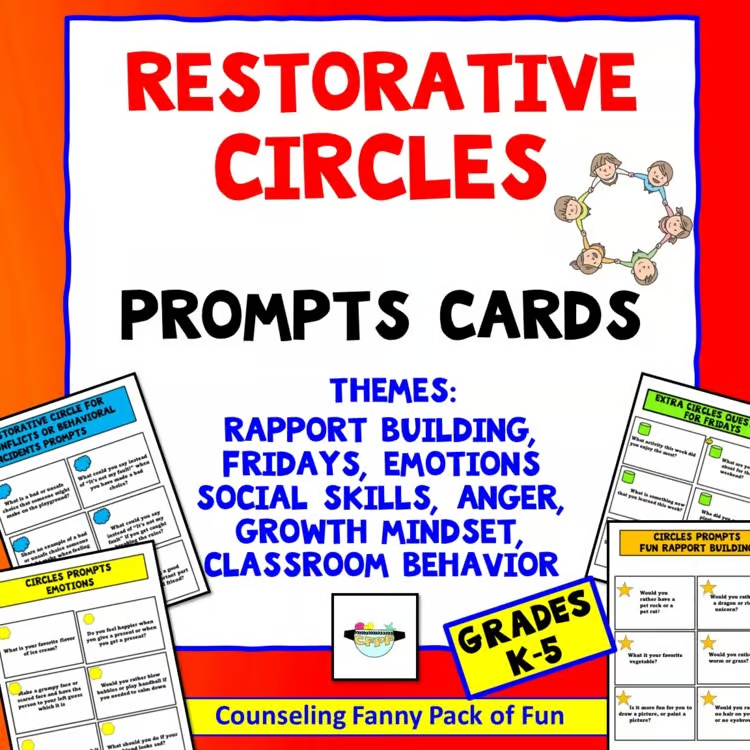
Restorative Circles Prompts CARDS for Grades K-8; Classroom SEL Activity
For classroom teachers or group counseling session, create a safe-space for discussion, improve classroom behaviors, and increase learning of SEL skills with the Restorative Circle Question Cards. Circles can be an important tools for nurturing relationships and feelings of community and can have a profound impact on bullying.
“All About Me” 1 page WORKSHEET for Getting to know your Students Grades 1 – 8
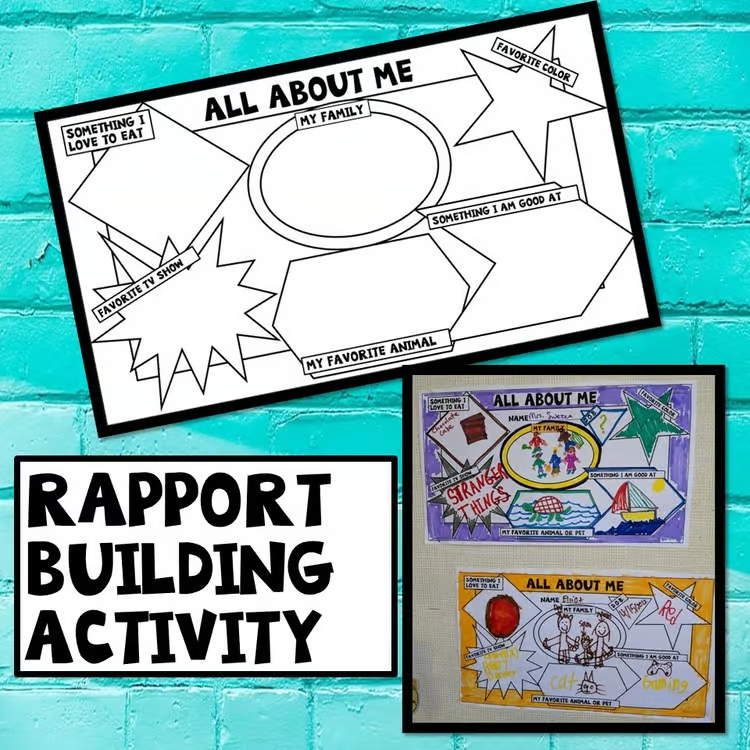
Use this “All about me” worksheet to get to know your students, as an icebreaker activity, and/or build rapport with your counseling students. Students can draw pictures or write words in each shape and then share with the class or group what they put for each topic (Family Members, Favorite Color, Favorite Food, Pet or Favorite Animal, Favorite TV show, and Something they are good at.) Then use the completed worksheet to decorate your classroom or office.
Final Thoughts
Rapport isn’t built in a single session—it’s built one conversation, one shared laugh, and one meaningful interaction at a time. When children feel heard, valued, and accepted, they’re much more willing to participate, listen to your advise, make changes, and grow.
Some of the most impactful counseling moments don’t happen because of the “perfect” intervention. They happen because a child realizes there’s an adult who genuinely enjoys spending time with them. They’ll have someone who holds them accountable and wants the nest for them…and it’s YOU!
So don’t worry about rushing into the hard topics. Play a game. Ask a few fun questions. Share a laugh. Those simple moments are often the beginning of a trusting relationship—and that’s where the real work of counseling begins.

Here are some Engaging RAPPORT BUILDING GAMES and Activities that are Fun, Pre-Made, and Under $4 in the Counseling Fanny Pack of FUN Store on TpT:
Just click on the picture to learn more or purchase the activity.


JENGA Rapport Building and OTHER THERAPY TOPICS (Anger Management, Empathy, Social Skills, Coping Skills, and Behavior) Games!
All of these rapport building games and worksheets are available in my new book (April 2022), The School Psych’s Handbook for the Best School Year EVER! Available as PDF download on Teachers Pay Teachers. Just click below to learn more!
